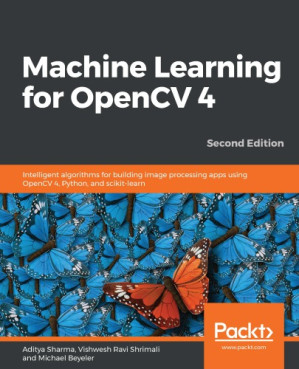
lgli/r:\!fiction\0day\1\Machine Learning for OpenCV 4, 2nd ed. - Beyeler,Sharma,Shrimali (Packt Publishing;2019;9781789536300;eng).epub
Machine Learning for OpenCV 4 : Intelligent Algorithms for Building Image Processing Apps Using OpenCV 4, Python, and Scikit-learn, 2nd Edition 🔍
Beyeler, Michael;Sharma, Aditya;Vishwesh Ravi Shrimali
Packt Publishing, Limited; Packt Publishing, 2nd ed, Place of publication not identified, 2019
英语 [en] · EPUB · 13.3MB · 2019 · 📘 非小说类图书 · 🚀/lgli/lgrs/nexusstc/zlib · Save
描述
A practical guide to understanding the core machine learning and deep learning algorithms, and implementing them to create intelligent image processing systems using OpenCV 4 Key Features Gain insights into machine learning algorithms, and implement them using OpenCV 4 and scikit-learn Get up to speed with Intel OpenVINO and its integration with OpenCV 4 Implement high-performance machine learning models with helpful tips and best practices Book Description OpenCV is an opensource library for building computer vision apps. The latest release, OpenCV 4, offers a plethora of features and platform improvements that are covered comprehensively in this up-to-date second edition. You'll start by understanding the new features and setting up OpenCV 4 to build your computer vision applications. You will explore the fundamentals of machine learning and even learn to design different algorithms that can be used for image processing. Gradually, the book will take you through supervised and unsupervised machine learning. You will gain hands-on experience using scikit-learn in Python for a variety of machine learning applications. Later chapters will focus on different machine learning algorithms, such as a decision tree, support vector machines (SVM), and Bayesian learning, and how they can be used for object detection computer vision operations. You will then delve into deep learning and ensemble learning, and discover their real-world applications, such as handwritten digit classification and gesture recognition. Finally, you'll get to grips with the latest Intel OpenVINO for building an image processing system. By the end of this book, you will have developed the skills you need to use machine learning for building intelligent computer vision applications with OpenCV 4. What you will learn Understand the core machine learning concepts for image processing Explore the theory behind machine learning and deep learning algorithm design Discover effective techniques to train your deep learning models Evaluate machine learning models to improve the performance of your models Integrate algorithms such as support vector machines and Bayes classifier in your computer vision applications Use OpenVINO with OpenCV 4 to speed up model inference Who this book is for This book is for Computer Vision professionals, machine learning developers, or anyone who wants to learn machine learning algorithms and implement them using OpenCV 4. If you want to build real-world Co...
备用文件名
lgrsnf/r:\!fiction\0day\1\Machine Learning for OpenCV 4, 2nd ed. - Beyeler,Sharma,Shrimali (Packt Publishing;2019;9781789536300;eng).epub
备用文件名
nexusstc/Machine Learning for OpenCV 4/0c2af040fc5817ca47a36b96d3af6e5d.epub
备用文件名
zlib/no-category/Beyeler, Michael;Sharma, Aditya;Vishwesh Ravi Shrimali/Machine Learning for OpenCV 4_5853113.epub
备选标题
Python Machine Learning : Learn How to Build Powerful Python Machine Learning Algorithms to Generate Useful Data Insights with This Data Analysis Tutorial
备选标题
Python Machine Learning Cookbook : Over 100 Recipes to Progress From Smart Data Analytics to Deep Learning Using Real-world Datasets, 2nd Edition
备选标题
Machine learning for OpenCV 4 intelligent algorithms for building image processing apps using OpenCV 4, Python, and scikit-learn, second edition
备选标题
Python Machine Learning By Example : Implement Machine Learning Algorithms and Techniques to Build Intelligent Systems, 2nd Edition
备选标题
Python machine learning : unlock deeper insights into machine learning with this vital guide to cutting-edge predictive analytics
备选标题
Введение в машинное обучение с помощью Python: руководство для специалистов по работе с данными: [полноцветное издание]
备选标题
Python и машинное обучение: наука и искусство построения алгоритмов, которые извлекают знания из данных
备选标题
Introduction to Machine Learning with Python : A Guide for Data Scientists
备选作者
Андреас Мюллер, Сара Гвидо; [перевод с английского и редакция А. В. Груздева]
备选作者
Sharma, Aditya, Shrimali, Vishwesh Ravi, Beyeler, Michael
备选作者
Aditya Sharma; Vishwesh Ravi Shrimali; Michael Beyeler
备选作者
Себастьян Рашка; перевод с англ. А. В. Логунова
备选作者
Yuxi Liu; Safari, an O'Reilly Media Company
备选作者
Ciaburro, Giuseppe, Joshi, Prateek
备选作者
Giuseppe Ciaburro; Prateek Joshi
备选作者
Andreas C. Mueller, Sarah Guido
备选作者
Andreas C. Müller; Sarah Guido
备选作者
Müller, Andreas, Guido, Sarah
备选作者
Liu, Yuxi (Hayden)
备选作者
Raschka, Sebastian
备选作者
Sebastian Raschka
备选作者
Yuxi (Hayden) Liu
备选作者
Рашка, Себастьян
备选作者
Мюллер, Андреас
备用出版商
O'Reilly Media; O'Reilly Media, Inc.
备用出版商
O'Reilly Media, Incorporated
备用出版商
Диалектика
备用出版商
ДМК Пресс
备用版本
Community experience distilled, Community experience distilled, England, 2016
备用版本
Community experience distilled, Birmingham, UK, 2015
备用版本
First edition, third release, Sebastopol, CA, 2017
备用版本
Packt Publishing, Birmingham, England, 2019
备用版本
United Kingdom and Ireland, United Kingdom
备用版本
United States, United States of America
备用版本
Packt Publishing, Birmingham, UK, 2015
备用版本
Packt Publishing, Birmingham, UK, 2019
备用版本
Цветное издание, Москва, Russia, 2017
备用版本
O'Reilly Media, Sebastopol, CA, 2017
备用版本
Second edition, Birmingham, UK, 2019
备用版本
First edition, Sebastopol, CA, 2016
备用版本
Packt Publishing, [N.p.], 2019
备用版本
First edition, Beijing, 2016
备用版本
Москва [и др.], Russia, 2017
备用版本
2nd ed, Birmingham, 2019
备用版本
2nd Edition, PS, 2019
备用版本
September 25, 2016
备用版本
1st edition, 2015
备用版本
1, FR, 2016
备用版本
2019-02-28
备用版本
2019-09-06
元数据中的注释
lg2590184
元数据中的注释
{"edition":"2","publisher":"Packt Publishing"}
元数据中的注释
Includes index.
元数据中的注释
gaaagpl
元数据中的注释
Предм. указ.: с. 465-472
Пер.: Müller, Andreas C. Introduction to machine leaning with Python Beijing [etc.] : O'Reilly, cop. 2017 978-1-449-36941-5
Пер.: Müller, Andreas C. Introduction to machine leaning with Python Beijing [etc.] : O'Reilly, cop. 2017 978-1-449-36941-5
元数据中的注释
РГБ
元数据中的注释
Russian State Library [rgb] MARC:
=001 008925002
=005 20180420133212.0
=008 170623s2017\\\\ru\||||\\\\\\\0||\|\rus|d
=017 \\ $a КН-П-18-028128 $b RuMoRKP
=017 \\ $a 17-47693 $b RuMoRKP
=020 \\ $a 978-5-9908910-8-1 $c 1000 экз.
=040 \\ $a RuMoRGB $b rus $e rcr $d RuMoRGB
=041 1\ $a rus $h eng
=044 \\ $a ru
=084 \\ $a З973.2-018.19Python,0 $2 rubbk
=100 1\ $a Мюллер, Андреас
=245 00 $a Введение в машинное обучение с помощью Python $h [Текст] : $b руководство для специалистов по работе с данными : [полноцветное издание] $c Андреас Мюллер, Сара Гвидо ; [перевод с английского и редакция А. В. Груздева]
=260 \\ $a Москва [и др.] $b Диалектика $c 2017
=300 \\ $a 472, [1] с. $b ил., табл., цв. ил. $c 24 см
=336 \\ $a текст (text) $b txt $2 rdacontent
=337 \\ $a неопосредованный (unmediated) $b n $2 rdamedia
=338 \\ $a том (volume) $b nc $2 rdacarrier
=500 \\ $a Предм. указ.: с. 465-472
=534 \\ $p Пер.: $a Müller, Andreas C. $t Introduction to machine leaning with Python $c Beijing [etc.] : O'Reilly, cop. 2017 $z 978-1-449-36941-5
=650 \7 $a Вычислительная техника -- Вычислительные машины электронные цифровые -- Программирование -- Языки программирования -- Python -- Пособие для специалистов $2 rubbk
=650 \7 $a PYTHON, язык программирования $0 RU\NLR\AUTH\661326547 $2 nlr_sh
=700 1\ $a Гвидо, Сара
=852 \\ $a РГБ $b FB $j 2 17-43/104 $x 90
=852 7\ $a РГБ $b CZ2 $h З973.2-018/М98 $x 83
=852 \\ $a РГБ $b FB $j 2 18-18/413 $x 90
=001 008925002
=005 20180420133212.0
=008 170623s2017\\\\ru\||||\\\\\\\0||\|\rus|d
=017 \\ $a КН-П-18-028128 $b RuMoRKP
=017 \\ $a 17-47693 $b RuMoRKP
=020 \\ $a 978-5-9908910-8-1 $c 1000 экз.
=040 \\ $a RuMoRGB $b rus $e rcr $d RuMoRGB
=041 1\ $a rus $h eng
=044 \\ $a ru
=084 \\ $a З973.2-018.19Python,0 $2 rubbk
=100 1\ $a Мюллер, Андреас
=245 00 $a Введение в машинное обучение с помощью Python $h [Текст] : $b руководство для специалистов по работе с данными : [полноцветное издание] $c Андреас Мюллер, Сара Гвидо ; [перевод с английского и редакция А. В. Груздева]
=260 \\ $a Москва [и др.] $b Диалектика $c 2017
=300 \\ $a 472, [1] с. $b ил., табл., цв. ил. $c 24 см
=336 \\ $a текст (text) $b txt $2 rdacontent
=337 \\ $a неопосредованный (unmediated) $b n $2 rdamedia
=338 \\ $a том (volume) $b nc $2 rdacarrier
=500 \\ $a Предм. указ.: с. 465-472
=534 \\ $p Пер.: $a Müller, Andreas C. $t Introduction to machine leaning with Python $c Beijing [etc.] : O'Reilly, cop. 2017 $z 978-1-449-36941-5
=650 \7 $a Вычислительная техника -- Вычислительные машины электронные цифровые -- Программирование -- Языки программирования -- Python -- Пособие для специалистов $2 rubbk
=650 \7 $a PYTHON, язык программирования $0 RU\NLR\AUTH\661326547 $2 nlr_sh
=700 1\ $a Гвидо, Сара
=852 \\ $a РГБ $b FB $j 2 17-43/104 $x 90
=852 7\ $a РГБ $b CZ2 $h З973.2-018/М98 $x 83
=852 \\ $a РГБ $b FB $j 2 18-18/413 $x 90
元数据中的注释
Предм. указ.: с. 408-417
Пер.: Raschka, Sebastian Python machine learning Birmingham ; Mumbai : Packt, cop. 2016 978-1-78355-513-0
Пер.: Raschka, Sebastian Python machine learning Birmingham ; Mumbai : Packt, cop. 2016 978-1-78355-513-0
元数据中的注释
Russian State Library [rgb] MARC:
=001 010416772
=005 20200929115449.0
=008 200713s2017\\\\ru\\\\\\\\\\\\|||\|\rus\d
=017 \\ $a 7086-20 $b RuMoRGB
=020 \\ $a 978-5-97060-409-0 $c 200 экз.
=040 \\ $a RuMoRGB $b rus $e rcr
=041 1\ $a rus $h eng
=044 \\ $a ru
=084 \\ $a З973.236-018.19Python,07 $2 rubbk
=100 1\ $a Рашка, Себастьян
=245 00 $a Python и машинное обучение : $b наука и искусство построения алгоритмов, которые извлекают знания из данных $c Себастьян Рашка ; перевод с англ. А. В. Логунова
=260 \\ $a Москва $b ДМК Пресс $c 2017
=300 \\ $a 417 с. $b ил., цв. ил., табл. $c 25 см
=336 \\ $a Текст (визуальный)
=337 \\ $a непосредственный
=490 0\ $a Цветное издание
=500 \\ $a Предм. указ.: с. 408-417
=534 \\ $p Пер.: $a Raschka, Sebastian $t Python machine learning $c Birmingham ; Mumbai : Packt, cop. 2016 $z 978-1-78355-513-0
=650 \7 $a Техника. Технические науки -- Энергетика. Радиоэлектроника -- Энергетика -- Вычислительная техника -- Вычислительные машины электронные цифровые -- Обучающие машины -- Языки программирования -- Python -- Пособие для специалистов $2 rubbk
=852 \\ $a РГБ $b FB $j 2 20-44/151 $x 90
=001 010416772
=005 20200929115449.0
=008 200713s2017\\\\ru\\\\\\\\\\\\|||\|\rus\d
=017 \\ $a 7086-20 $b RuMoRGB
=020 \\ $a 978-5-97060-409-0 $c 200 экз.
=040 \\ $a RuMoRGB $b rus $e rcr
=041 1\ $a rus $h eng
=044 \\ $a ru
=084 \\ $a З973.236-018.19Python,07 $2 rubbk
=100 1\ $a Рашка, Себастьян
=245 00 $a Python и машинное обучение : $b наука и искусство построения алгоритмов, которые извлекают знания из данных $c Себастьян Рашка ; перевод с англ. А. В. Логунова
=260 \\ $a Москва $b ДМК Пресс $c 2017
=300 \\ $a 417 с. $b ил., цв. ил., табл. $c 25 см
=336 \\ $a Текст (визуальный)
=337 \\ $a непосредственный
=490 0\ $a Цветное издание
=500 \\ $a Предм. указ.: с. 408-417
=534 \\ $p Пер.: $a Raschka, Sebastian $t Python machine learning $c Birmingham ; Mumbai : Packt, cop. 2016 $z 978-1-78355-513-0
=650 \7 $a Техника. Технические науки -- Энергетика. Радиоэлектроника -- Энергетика -- Вычислительная техника -- Вычислительные машины электронные цифровые -- Обучающие машины -- Языки программирования -- Python -- Пособие для специалистов $2 rubbk
=852 \\ $a РГБ $b FB $j 2 20-44/151 $x 90
备用描述
<p>Unlock deeper insights into Machine Leaning with this vital guide to cutting-edge predictive analytics<br></p><p>About This Book<br></p><ul> <li>Leverage Python's most powerful open-source libraries for deep learning, data wrangling, and data visualization </li> <li>Learn effective strategies and best practices to improve and optimize machine learning systems and algorithms </li> <li>Ask – and answer – tough questions of your data with robust statistical models, built for a range of datasets </li></ul><p>Who This Book Is For<br></p><p>If you want to find out how to use Python to start answering critical questions of your data, pick up Python Machine Learning – whether you want to get started from scratch or want to extend your data science knowledge, this is an essential and unmissable resource.<br></p><p>What You Will Learn<br></p><ul> <li>Explore how to use different machine learning models to ask different questions of your data </li> <li>Learn how to build neural networks using Keras and Theano </li> <li>Find out how to write clean and elegant Python code that will optimize the strength of your algorithms </li> <li>Discover how to embed your machine learning model in a web application for increased accessibility </li> <li>Predict continuous target outcomes using regression analysis </li> <li>Uncover hidden patterns and structures in data with clustering </li> <li>Organize data using effective pre-processing techniques </li> <li>Get to grips with sentiment analysis to delve deeper into textual and social media data </li></ul><p>In Detail<br></p><p>Machine learning and predictive analytics are transforming the way businesses and other organizations operate. Being able to understand trends and patterns in complex data is critical to success, becoming one of the key strategies for unlocking growth in a challenging contemporary marketplace. Python can help you deliver key insights into your data – its unique capabilities as a language let you build sophisticated algorithms and statistical models that can reveal new perspectives and answer key questions that are vital for success.<br></p><p>Python Machine Learning gives you access to the world of predictive analytics and demonstrates why Python is one of the world's leading data science languages. If you want to ask better questions of data, or need to improve and extend the capabilities of your machine learning systems, this practical data science book is invaluable. Covering a wide range of powerful Python libraries, including scikit-learn, Theano, and Keras, and featuring guidance and tips on everything from sentiment analysis to neural networks, you'll soon be able to answer some of the most important questions facing you and your organization.<br></p><p>Style and approach<br></p><p>Python Machine Learning connects the fundamental theoretical principles behind machine learning to their practical application in a way that focuses you on asking and answering the right questions. It walks you through the key elements of Python and its powerful machine learning libraries, while demonstrating how to get to grips with a range of statistical models.<br></p>
备用描述
Discover powerful ways to effectively solve real-world machine learning problems using key libraries including scikit-learn, TensorFlow, and PyTorch
Key Features
Learn and implement machine learning algorithms in a variety of real-life scenarios
Cover a range of tasks catering to supervised, unsupervised and reinforcement learning techniques
Find easy-to-follow code solutions for tackling common and not-so-common challenges
Book Description This eagerly anticipated second edition of the popular Python Machine Learning Cookbook will enable you to adopt a fresh approach to dealing with real-world machine learning and deep learning tasks.
With the help of over 100 recipes, you will learn to build powerful machine learning applications using modern libraries from the Python ecosystem. The book will also guide you on how to implement various machine learning algorithms for classification, clustering, and recommendation engines, using a recipe-based approach. With emphasis on practical solutions, dedicated sections in the book will help you to apply supervised and unsupervised learning techniques to real-world problems. Toward the concluding chapters, you will get to grips with recipes that teach you advanced techniques including reinforcement learning, deep neural networks, and automated machine learning.
By the end of this book, you will be equipped with the skills you need to apply machine learning techniques and leverage the full capabilities of the Python ecosystem through real-world examples.
What you will learn
Use predictive modeling and apply it to real-world problems
Explore data visualization techniques to interact with your data
Learn how to build a recommendation engine
Understand how to interact with text data and build models to analyze it
Work with speech data and recognize spoken words using Hidden Markov Models
Get well versed with reinforcement learning, automated ML, and transfer learning
Work with image data and build systems for image recognition and biometric face recognition
Use deep neural networks to build an optical character recognition system
Who this book is for This book is for data scientists, machine learning developers, deep learning enthusiasts and Python programmers who want to solve real-world challenges using machine-learning techniques and algorithms. If you are facing challenges at work and want ready-to-use code solutions to cover key tasks in machine learning and the deep learning domain, then this book is what you need. Familiarity with Python programming and machine learning concepts will be useful.
Table of Contents
The Realm of Supervised Learning
Constructing a Classifier
Predictive Modeling
Clustering with Unsupervised Learning
Visualizing Data
Building Recommendation Engines
Analyzing Text Data
Speech Recognition
Dissecting Time Series and Sequential Data
Image Content Analysis
Biometric Face Recognition
Reinforcement Learning Techniques
Deep Neural Networks
Unsupervised Representation Learning
Automated machine learning and Transfer learning
Unlocking Production issues
Key Features
Learn and implement machine learning algorithms in a variety of real-life scenarios
Cover a range of tasks catering to supervised, unsupervised and reinforcement learning techniques
Find easy-to-follow code solutions for tackling common and not-so-common challenges
Book Description This eagerly anticipated second edition of the popular Python Machine Learning Cookbook will enable you to adopt a fresh approach to dealing with real-world machine learning and deep learning tasks.
With the help of over 100 recipes, you will learn to build powerful machine learning applications using modern libraries from the Python ecosystem. The book will also guide you on how to implement various machine learning algorithms for classification, clustering, and recommendation engines, using a recipe-based approach. With emphasis on practical solutions, dedicated sections in the book will help you to apply supervised and unsupervised learning techniques to real-world problems. Toward the concluding chapters, you will get to grips with recipes that teach you advanced techniques including reinforcement learning, deep neural networks, and automated machine learning.
By the end of this book, you will be equipped with the skills you need to apply machine learning techniques and leverage the full capabilities of the Python ecosystem through real-world examples.
What you will learn
Use predictive modeling and apply it to real-world problems
Explore data visualization techniques to interact with your data
Learn how to build a recommendation engine
Understand how to interact with text data and build models to analyze it
Work with speech data and recognize spoken words using Hidden Markov Models
Get well versed with reinforcement learning, automated ML, and transfer learning
Work with image data and build systems for image recognition and biometric face recognition
Use deep neural networks to build an optical character recognition system
Who this book is for This book is for data scientists, machine learning developers, deep learning enthusiasts and Python programmers who want to solve real-world challenges using machine-learning techniques and algorithms. If you are facing challenges at work and want ready-to-use code solutions to cover key tasks in machine learning and the deep learning domain, then this book is what you need. Familiarity with Python programming and machine learning concepts will be useful.
Table of Contents
The Realm of Supervised Learning
Constructing a Classifier
Predictive Modeling
Clustering with Unsupervised Learning
Visualizing Data
Building Recommendation Engines
Analyzing Text Data
Speech Recognition
Dissecting Time Series and Sequential Data
Image Content Analysis
Biometric Face Recognition
Reinforcement Learning Techniques
Deep Neural Networks
Unsupervised Representation Learning
Automated machine learning and Transfer learning
Unlocking Production issues
备用描述
Unlock deeper insights into Machine Leaning with this vital guide to cutting-edge predictive analyticsAbout This BookLeverage Python's most powerful open-source libraries for deep learning, data wrangling, and data visualizationLearn effective strategies and best practices to improve and optimize machine learning systems and algorithmsAsk - and answer - tough questions of your data with robust statistical models, built for a range of datasetsWho This Book Is ForIf you want to find out how to use Python to start answering critical questions of your data, pick up Python Machine Learning - whether you want to get started from scratch or want to extend your data science knowledge, this is an essential and unmissable resource. What You Will LearnExplore how to use different machine learning models to ask different questions of your dataLearn how to build neural networks using Pylearn 2 and TheanoFind out how to write clean and elegant Python code that will optimize the strength of your algorithmsDiscover how to embed your machine learning model in a web application for increased accessibilityPredict continuous target outcomes using regression analysisUncover hidden patterns and structures in data with clusteringOrganize data using effective pre-processing techniquesGet to grips with sentiment analysis to delve deeper into textual and social media dataIn DetailMachine learning and predictive analytics are transforming the way businesses and other organizations operate. Being able to understand trends and patterns in complex data is critical to success, becoming one of the key strategies for unlocking growth in a challenging contemporary marketplace. Python can help you deliver key insights into your data - its unique capabilities as a language let you build sophisticated algorithms and statistical models that can reveal new perspectives and answer key questions that are vital for success. Python Machine Learning gives you access to the world of predictive analytics and demonstrates why Python is one of the world's leading data science languages. If you want to ask better questions of data, or need to improve and extend the capabilities of your machine learning systems, this practical data science book is invaluable. Covering a wide range of powerful Python libraries, including scikit-learn, Theano, and Pylearn2, and featuring guidance and tips on everything from sentiment analysis to neural networks, you'll soon be able to answer some of the most important questions facing you and your organization. Style and approachPython Machine Learning connects the fundamental theoretical principles behind machine learning to their practical application in a way that focuses you on asking and answering the right questions. It walks you through the key elements of Python and its powerful machine learning libraries, while demonstrating how to get to grips with a range of statistical models
备用描述
A practical guide to understanding the core machine learning and deep learning algorithms, and implementing them to create intelligent image processing systems using OpenCV 4Key FeaturesGain insights into machine learning algorithms, and implement them using OpenCV 4 and scikit-learnGet up to speed with Intel OpenVINO and its integration with OpenCV 4Implement high-performance machine learning models with helpful tips and best practicesBook DescriptionOpenCV is an opensource library for building computer vision apps. The latest release, OpenCV 4, offers a plethora of features and platform improvements that are covered comprehensively in this up-to-date second edition.You'll start by understanding the new features and setting up OpenCV 4 to build your computer vision applications. You will explore the fundamentals of machine learning and even learn to design different algorithms that can be used for image processing. Gradually, the book will take you through supervised and unsupervised machine learning. You will gain hands-on experience using scikit-learn in Python for a variety of machine learning applications. Later chapters will focus on different machine learning algorithms, such as a decision tree, support vector machines (SVM), and Bayesian learning, and how they can be used for object detection computer vision operations. You will then delve into deep learning and ensemble learning, and discover their real-world applications, such as handwritten digit classification and gesture recognition. Finally, you'll get to grips with the latest Intel OpenVINO for building an image processing system.By the end of this book, you will have developed the skills you need to use machine learning for building intelligent computer vision applications with OpenCV 4.What you will learnUnderstand the core machine learning concepts for image processingExplore the theory behind machine learning and deep learning algorithm designDiscover effective techniques to train your deep learning modelsEvaluate machine learning models to improve the performance of your modelsIntegrate algorithms such as support vector machines and Bayes classifier in your computer vision applicationsUse OpenVINO with OpenCV 4 to speed up model inferenceWho this book is forThis book is for Computer Vision professionals, machine learning developers, or anyone who wants to learn machine learning algorithms and implement them using OpenCV 4. If you want to build real-world Computer Vision and image processing applications powered by machine learning, then this book is for you. Working knowledge of Python programming is required to get the most out of this book.
备用描述
Grasp machine learning concepts, techniques, and algorithms with the help of real-world examples using Python libraries such as TensorFlow and scikit-learnKey FeaturesExploit the power of Python to explore the world of data mining and data analyticsDiscover machine learning algorithms to solve complex challenges faced by data scientists todayUse Python libraries such as TensorFlow and Keras to create smart cognitive actions for your projectsBook DescriptionThe surge in interest in machine learning (ML) is due to the fact that it revolutionizes automation by learning patterns in data and using them to make predictions and decisions. If you're interested in ML, this book will serve as your entry point to ML.Python Machine Learning By Example begins with an introduction to important ML concepts and implementations using Python libraries. Each chapter of the book walks you through an industry adopted application. You'll implement ML techniques in areas such as exploratory data analysis, feature engineering, and natural language processing (NLP) in a clear and easy-to-follow way.With the help of this extended and updated edition, you'll understand how to tackle data-driven problems and implement your solutions with the powerful yet simple Python language and popular Python packages and tools such as TensorFlow, scikit-learn, gensim, and Keras. To aid your understanding of popular ML algorithms, the book covers interesting and easy-to-follow examples such as news topic modeling and classification, spam email detection, stock price forecasting, and more.By the end of the book, you'll have put together a broad picture of the ML ecosystem and will be well-versed with the best practices of applying ML techniques to make the most out of new opportunities.What you will learnUnderstand the important concepts in machine learning and data scienceUse Python to explore the world of data mining and analyticsScale up model training using varied data complexities with Apache SparkDelve deep into text and NLP using Python libraries such NLTK and gensimSelect and build an ML model and evaluate and optimize its performanceImplement ML algorithms from scratch in Python, TensorFlow, and scikit-learnWho this book is forIf you're a machine learning aspirant, data analyst, or data engineer highly passionate about machine learning and want to begin working on ML assignments, this book is for you. Prior knowledge of Python coding is assumed and basic familiarity with statistical concepts will be beneficial although not necessary.
备用描述
Unlock deeper insights into Machine Leaning with this vital guide to cutting-edge predictive analyticsKey FeaturesLeverage Python's most powerful open-source libraries for deep learning, data wrangling, and data visualizationLearn effective strategies and best practices to improve and optimize machine learning systems and algorithmsAsk – and answer – tough questions of your data with robust statistical models, built for a range of datasetsBook DescriptionMachine learning and predictive analytics are transforming the way businesses and other organizations operate. Being able to understand trends and patterns in complex data is critical to success, becoming one of the key strategies for unlocking growth in a challenging contemporary marketplace. Python can help you deliver key insights into your data – its unique capabilities as a language let you build sophisticated algorithms and statistical models that can reveal new perspectives and answer key questions that are vital for success. Python Machine Learning gives you access to the world of predictive analytics and demonstrates why Python is one of the world's leading data science languages. If you want to ask better questions of data, or need to improve and extend the capabilities of your machine learning systems, this practical data science book is invaluable. Covering a wide range of powerful Python libraries, including scikit-learn, Theano, and Keras, and featuring guidance and tips on everything from sentiment analysis to neural networks, you'll soon be able to answer some of the most important questions facing you and your organization. What you will learnExplore how to use different machine learning models to ask different questions of your dataLearn how to build neural networks using Keras and TheanoFind out how to write clean and elegant Python code that will optimize the strength of your algorithmsDiscover how to embed your machine learning model in a web application for increased accessibilityPredict continuous target outcomes using regression analysisUncover hidden patterns and structures in data with clusteringOrganize data using effective pre-processing techniquesGet to grips with sentiment analysis to delve deeper into textual and social media dataWho this book is forIf you want to find out how to use Python to start answering critical questions of your data, pick up Python Machine Learning – whether you want to get started from scratch or want to extend your data science knowledge, this is an essential and unmissable resource.
备用描述
Unlock deeper insights into Machine Leaning with this vital guide to cutting-edge predictive analytics About This Book Leverage Python's most powerful open-source libraries for deep learning, data wrangling, and data visualization Learn effective strategies and best practices to improve and optimize machine learning systems and algorithms Ask -- and answer -- tough questions of your data with robust statistical models, built for a range of datasets Who This Book Is For If you want to find out how to use Python to start answering critical questions of your data, pick up Python Machine Learning -- whether you want to get started from scratch or want to extend your data science knowledge, this is an essential and unmissable resource. What You Will Learn Explore how to use different machine learning models to ask different questions of your data Learn how to build neural networks using Pylearn 2 and Theano Find out how to write clean and elegant Python code that will optimize the strength of your algorithms Discover how to embed your machine learning model in a web application for increased accessibility Predict continuous target outcomes using regression analysis Uncover hidden patterns and structures in data with clustering Organize data using effective pre-processing techniques Get to grips with sentiment analysis to delve deeper into textual and social media data In Detail Machine learning and predictive analytics are transforming the way businesses and other organizations operate. Being able to understand trends and patterns in complex data is critical to success, becoming one of the key strategies for unlocking growth in a challenging contemporary marketplace. Python can help you deliver key insights into your data -- its unique capabilities as a language let you build sophisticated algorithms and statistical models that can reveal new perspectives and answer key questions that are vital for success. Python Machine Learning gives you access to the world of predictive analytics and demonstrates why Python is one of the world's leading data science languages. If you want to ask better questions of data, or need to improve and extend the capabilities of your machine learning systems, this practical data science book is invaluable. Covering a wide range of powerful Python libraries, including scikit-learn, Theano, and Pylearn2, and featuring guidance and tips on everything from sentiment analysis to neural networks, you'll soon be able to answer som..
备用描述
Grasp machine learning concepts, techniques, and algorithms with the help of real-world examples using Python libraries such as TensorFlow and scikit-learn Key Features Exploit the power of Python to explore the world of data mining and data analytics Discover machine learning algorithms to solve complex challenges faced by data scientists today Use Python libraries such as TensorFlow and Keras to create smart cognitive actions for your projects Book Description The surge in interest in machine learning (ML) is due to the fact that it revolutionizes automation by learning patterns in data and using them to make predictions and decisions. If you're interested in ML, this book will serve as your entry point to ML. Python Machine Learning By Example begins with an introduction to important ML concepts and implementations using Python libraries. Each chapter of the book walks you through an industry adopted application. You'll implement ML techniques in areas such as exploratory data analysis, feature engineering, and natural language processing (NLP) in a clear and easy-to-follow way. With the help of this extended and updated edition, you'll understand how to tackle data-driven problems and implement your solutions with the powerful yet simple Python language and popular Python packages and tools such as TensorFlow, scikit-learn, gensim, and Keras. To aid your understanding of popular ML algorithms, the book covers interesting and easy-to-follow examples such as news topic modeling and classification, spam email detection, stock price forecasting, and more. By the end of the book, you'll have put together a broad picture of the ML ecosystem and will be well-versed with the best practices of applying ML techniques to make the most out of new opportunities. What you will learn Understand the important concepts in machine learning and data science Use Python to explore the world of data mining and analytics Scale up model training using varied data complexities with Apache Spark Delve deep into text and NLP using Python libraries such NLTK and gensim Select and build an ML model and evaluate and optimize its performance Implement ML algorithms from scratch in Python, TensorFlow, and scikit-learn Who this book is for If you're a machine learning aspirant, data analyst, or data engineer highly passionate about machine learning and want to begin working on ML assignments, this book is for you. Prior knowledge of Python coding is assumed and basic fami ..
备用描述
Link to the GitHub Repository containing the code examples and additional material: (https://github.com/rasbt/python-machine-learning-book) https://github.com/rasbt/python-machi...
Many of the most innovative breakthroughs and exciting new technologies can be attributed to applications of machine learning. We are living in an age where data comes in abundance, and thanks to the self-learning algorithms from the field of machine learning, we can turn this data into knowledge. Automated speech recognition on our smart phones, web search engines, e-mail spam filters, the recommendation systems of our favorite movie streaming services machine learning makes it all possible.
Thanks to the many powerful open-source libraries that have been developed in recent years, machine learning is now right at our fingertips. Python provides the perfect environment to build machine learning systems productively.
This book will teach you the fundamentals of machine learning and how to utilize these in real-world applications using Python. Step-by-step, you will expand your skill set with the best practices for transforming raw data into useful information, developing learning algorithms efficiently, and evaluating results.
You will discover the different problem categories that machine learning can solve and explore how to classify objects, predict continuous outcomes with regression analysis, and find hidden structures in data via clustering. You will build your own machine learning system for sentiment analysis and finally, learn how to embed your model into a web app to share with the world
Many of the most innovative breakthroughs and exciting new technologies can be attributed to applications of machine learning. We are living in an age where data comes in abundance, and thanks to the self-learning algorithms from the field of machine learning, we can turn this data into knowledge. Automated speech recognition on our smart phones, web search engines, e-mail spam filters, the recommendation systems of our favorite movie streaming services machine learning makes it all possible.
Thanks to the many powerful open-source libraries that have been developed in recent years, machine learning is now right at our fingertips. Python provides the perfect environment to build machine learning systems productively.
This book will teach you the fundamentals of machine learning and how to utilize these in real-world applications using Python. Step-by-step, you will expand your skill set with the best practices for transforming raw data into useful information, developing learning algorithms efficiently, and evaluating results.
You will discover the different problem categories that machine learning can solve and explore how to classify objects, predict continuous outcomes with regression analysis, and find hidden structures in data via clustering. You will build your own machine learning system for sentiment analysis and finally, learn how to embed your model into a web app to share with the world
备用描述
Machine learning has become an integral part of many commercial applications and research projects, but this field is not exclusive to large companies with extensive research teams. If you use Python, even as a beginner, this book will teach you practical ways to build your own machine learning solutions. With all the data available today, machine learning applications are limited only by your imagination.
You'll learn the steps necessary to create a successful machine-learning application with Python and the scikit-learn library. Authors Andreas Muller and Sarah Guido focus on the practical aspects of using machine learning algorithms, rather than the math behind them. Familiarity with the NumPy and matplotlib libraries will help you get even more from this book.
With this book, you'll learn:
Fundamental concepts and applications of machine learning
Advantages and shortcomings of widely used machine learning algorithms
How to represent data processed by machine learning, including which data aspects to focus on
Advanced methods for model evaluation and parameter tuning
The concept of pipelines for chaining models and encapsulating your workflow
Methods for working with text data, including text-specific processing techniques
Suggestions for improving your machine learning and data science skills
You'll learn the steps necessary to create a successful machine-learning application with Python and the scikit-learn library. Authors Andreas Muller and Sarah Guido focus on the practical aspects of using machine learning algorithms, rather than the math behind them. Familiarity with the NumPy and matplotlib libraries will help you get even more from this book.
With this book, you'll learn:
Fundamental concepts and applications of machine learning
Advantages and shortcomings of widely used machine learning algorithms
How to represent data processed by machine learning, including which data aspects to focus on
Advanced methods for model evaluation and parameter tuning
The concept of pipelines for chaining models and encapsulating your workflow
Methods for working with text data, including text-specific processing techniques
Suggestions for improving your machine learning and data science skills
备用描述
Machine learning has become an integral part of many commercial applications and research projects, but this field is not exclusive to large companies with extensive research teams. If you use Python, even as a beginner, this book will teach you practical ways to build your own machine learning solutions. With all the data available today, machine learning applications are limited only by your imagination.You'll learn the steps necessary to create a successful machine-learning application with Python and the scikit-learn library. Authors Andreas Müller and Sarah Guido focus on the practical aspects of using machine learning algorithms, rather than the math behind them. Familiarity with the NumPy and matplotlib libraries will help you get even more from this book.With this book, you'll learn:Fundamental concepts and applications of machine learningAdvantages and shortcomings of widely used machine learning algorithmsHow to represent data processed by machine learning, including which data aspects to focus onAdvanced methods for model evaluation and parameter tuningThe concept of pipelines for chaining models and encapsulating your workflowMethods for working with text data, including text-specific processing techniquesSuggestions for improving your machine learning and data science skills
备用描述
Machine learning has become an integral part of many commercial applications and research projects, but this field is not exclusive to large companies with extensive research teams. If you use Python, even as a beginner, this book will teach you practical ways to build your own machine learning solutions. With all the data available today, machine learning applications are limited only by your imagination. You'll learn the steps necessary to create a successful machine-learning application with Python and the scikit-learn library. Authors Andreas Müller and Sarah Guido focus on the practical aspects of using machine learning algorithms, rather than the math behind them. Familiarity with the NumPy and matplotlib libraries will help you get even more from this book. -- Provided by publisher
备用描述
Giving computers the ability to learn from data
Training machine learning algorithms for classification
A tour of machine learning classifiers using Scikit-learn
Building good training sets : data preprocessing
Compressing data via dimensionality reduction
Learning best practices for model evaluation and hyperparameter tuning
Combining different models for ensemble learning
Applying machine learning to sentiment analysis
Embedding a machine learning model into a web application
Predicting continuous target variables with regression analysis
Working with unlabeled data : clustering analysis
Training artificial neural networks for image recognition
Parallelizing neural network training with Theano.
Training machine learning algorithms for classification
A tour of machine learning classifiers using Scikit-learn
Building good training sets : data preprocessing
Compressing data via dimensionality reduction
Learning best practices for model evaluation and hyperparameter tuning
Combining different models for ensemble learning
Applying machine learning to sentiment analysis
Embedding a machine learning model into a web application
Predicting continuous target variables with regression analysis
Working with unlabeled data : clustering analysis
Training artificial neural networks for image recognition
Parallelizing neural network training with Theano.
备用描述
With this book, you will learn how to perform various machine learning tasks in different environments. You'll use a wide variety of machine learning algorithms using Python to solve real-world problems. By the end of the book, you will learn to implement most used machine learning algorithms using complex datasets and optimized techniques.
备用描述
Python Machine Learning by Example covers in detail the most important concepts, techniques, algorithms, and libraries that every data scientist or machine learning practitioner needs to know. This example-enriched guide will make your learning journey easier and happier, enabling you to solve real-world data-driven problems.
备用描述
Machine Learning for OpenCV 4, Second Edition will help the readers to implement and train machine learning algorithms with OpenCV 4 and scikit-learn in Python. By the end of this book, you will be able to build intelligent applications with OpenCV 4 using various optimization techniques for your machine learning algorithms
开源日期
2020-07-26
🚀 快速下载
成为会员以支持书籍、论文等的长期保存。为了感谢您对我们的支持,您将获得高速下载权益。❤️
🐢 低速下载
由可信的合作方提供。 更多信息请参见常见问题解答。 (可能需要验证浏览器——无限次下载!)
- 低速服务器(合作方提供) #1 (稍快但需要排队)
- 低速服务器(合作方提供) #2 (稍快但需要排队)
- 低速服务器(合作方提供) #3 (稍快但需要排队)
- 低速服务器(合作方提供) #4 (稍快但需要排队)
- 低速服务器(合作方提供) #5 (无需排队,但可能非常慢)
- 低速服务器(合作方提供) #6 (无需排队,但可能非常慢)
- 低速服务器(合作方提供) #7 (无需排队,但可能非常慢)
- 低速服务器(合作方提供) #8 (无需排队,但可能非常慢)
- 低速服务器(合作方提供) #9 (无需排队,但可能非常慢)
- 下载后: 在我们的查看器中打开
外部下载
-
对于大文件,我们建议使用下载管理器以防止中断。
推荐的下载管理器:JDownloader -
您将需要一个电子书或 PDF 阅读器来打开文件,具体取决于文件格式。
推荐的电子书阅读器:Anna的档案在线查看器、ReadEra和Calibre -
使用在线工具进行格式转换。
推荐的转换工具:CloudConvert和PrintFriendly -
您可以将 PDF 和 EPUB 文件发送到您的 Kindle 或 Kobo 电子阅读器。
推荐的工具:亚马逊的“发送到 Kindle”和djazz 的“发送到 Kobo/Kindle” -
支持作者和图书馆
✍️ 如果您喜欢这个并且能够负担得起,请考虑购买原版,或直接支持作者。
📚 如果您当地的图书馆有这本书,请考虑在那里免费借阅。
下面的文字仅以英文继续。
总下载量:
“文件的MD5”是根据文件内容计算出的哈希值,并且基于该内容具有相当的唯一性。我们这里索引的所有影子图书馆都主要使用MD5来标识文件。
一个文件可能会出现在多个影子图书馆中。有关我们编译的各种数据集的信息,请参见数据集页面。
有关此文件的详细信息,请查看其JSON 文件。 Live/debug JSON version. Live/debug page.