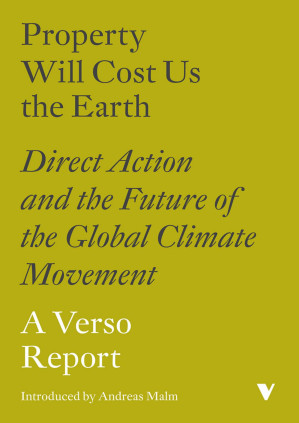
Property Will Cost Us the Earth: Direct Action and the Future of the Global Climate Movement 🔍
Verso Books; Jessie Kindig; Andreas Malm
Verso Books, US, 2022
英语 [en] · PDF · 1.8MB · 2022 · 📗 未知类型的图书 · 🚀/zlib · Save
描述
An urgent, freely downloadable ebook that asks: should we start blowing up pipelines, occupying coal mines, and destroying property to address global climate change?
Andreas Malms book How to Blow Up a Pipeline, with its call for the environmental movement to start sabotaging fossil fuel infrastructure to save our planet, has sparked a vibrant discussion on the left about the green state, direct action and violence, ecological Leninism, and existing pipeline struggles. It has also reignited longstanding fears of eco-sabotage on the right.
Collected here are a set of essays that grapple with the idea of direct action and eco-sabotage, survey climate activism around the world, and argue for the necessity of building a fighting global movement against capitalism and its fossil fuel regime.
Moving from Mozambique, the Niger Delta, and the coal mines of India to the forests of Ecuador and the watersheds of North America, Property Will Cost Us the Earth details the global scale of climate devastation as well as active struggles around the world to halt further extraction. From this come tactical and strategic questions: how can local direct actions relate to political work forcing states to end reliance on oil, coal, and gas? What kind of protest movement can we build that reflects the urgency of our moment? What does a direct actionbased movement require from those on the frontlines of struggle?
On one thing these essayists are agreed: protecting private property at the expense of our planet and our childrens lives is not a cost we should be willing to pay.
Contributors include: Alyssa Battistoni, James Butler, Joo Camargo, Jen Deerinwater, Ben Ehrenreich, Madeline ffitch, Frente Nacional Anti-Minero (Ecuador), Bue Rbner Hansen, Tara Houska, Jessie Kindig, Benjamin Kunkel, Anabela Lemos and Erika Mendes from Justia Ambiental! (Mozambique), Andreas Malm, MOTH Collective, Vanessa Nakate and Amy Goodman, Siihasin Hope, Brototi Roy, Andrea Semprtegui, Richard Seymour, and Adam Tooze.
Andreas Malms book How to Blow Up a Pipeline, with its call for the environmental movement to start sabotaging fossil fuel infrastructure to save our planet, has sparked a vibrant discussion on the left about the green state, direct action and violence, ecological Leninism, and existing pipeline struggles. It has also reignited longstanding fears of eco-sabotage on the right.
Collected here are a set of essays that grapple with the idea of direct action and eco-sabotage, survey climate activism around the world, and argue for the necessity of building a fighting global movement against capitalism and its fossil fuel regime.
Moving from Mozambique, the Niger Delta, and the coal mines of India to the forests of Ecuador and the watersheds of North America, Property Will Cost Us the Earth details the global scale of climate devastation as well as active struggles around the world to halt further extraction. From this come tactical and strategic questions: how can local direct actions relate to political work forcing states to end reliance on oil, coal, and gas? What kind of protest movement can we build that reflects the urgency of our moment? What does a direct actionbased movement require from those on the frontlines of struggle?
On one thing these essayists are agreed: protecting private property at the expense of our planet and our childrens lives is not a cost we should be willing to pay.
Contributors include: Alyssa Battistoni, James Butler, Joo Camargo, Jen Deerinwater, Ben Ehrenreich, Madeline ffitch, Frente Nacional Anti-Minero (Ecuador), Bue Rbner Hansen, Tara Houska, Jessie Kindig, Benjamin Kunkel, Anabela Lemos and Erika Mendes from Justia Ambiental! (Mozambique), Andreas Malm, MOTH Collective, Vanessa Nakate and Amy Goodman, Siihasin Hope, Brototi Roy, Andrea Semprtegui, Richard Seymour, and Adam Tooze.
备用版本
United Kingdom and Ireland, United Kingdom
开源日期
2024-11-25
We strongly recommend that you support the author by buying or donating on their personal website, or borrowing in your local library.
🚀 快速下载
成为会员以支持书籍、论文等的长期保存。为了感谢您对我们的支持,您将获得高速下载权益。❤️
🐢 低速下载
由可信的合作方提供。 更多信息请参见常见问题解答。 (可能需要验证浏览器——无限次下载!)
- 低速服务器(合作方提供) #1 (稍快但需要排队)
- 低速服务器(合作方提供) #2 (稍快但需要排队)
- 低速服务器(合作方提供) #3 (稍快但需要排队)
- 低速服务器(合作方提供) #4 (稍快但需要排队)
- 低速服务器(合作方提供) #5 (无需排队,但可能非常慢)
- 低速服务器(合作方提供) #6 (无需排队,但可能非常慢)
- 低速服务器(合作方提供) #7 (无需排队,但可能非常慢)
- 低速服务器(合作方提供) #8 (无需排队,但可能非常慢)
- 低速服务器(合作方提供) #9 (无需排队,但可能非常慢)
- 下载后: 在我们的查看器中打开
所有选项下载的文件都相同,应该可以安全使用。即使这样,从互联网下载文件时始终要小心。例如,确保您的设备更新及时。
外部下载
-
对于大文件,我们建议使用下载管理器以防止中断。
推荐的下载管理器:JDownloader -
您将需要一个电子书或 PDF 阅读器来打开文件,具体取决于文件格式。
推荐的电子书阅读器:Anna的档案在线查看器、ReadEra和Calibre -
使用在线工具进行格式转换。
推荐的转换工具:CloudConvert和PrintFriendly -
您可以将 PDF 和 EPUB 文件发送到您的 Kindle 或 Kobo 电子阅读器。
推荐的工具:亚马逊的“发送到 Kindle”和djazz 的“发送到 Kobo/Kindle” -
支持作者和图书馆
✍️ 如果您喜欢这个并且能够负担得起,请考虑购买原版,或直接支持作者。
📚 如果您当地的图书馆有这本书,请考虑在那里免费借阅。
下面的文字仅以英文继续。
总下载量:
“文件的MD5”是根据文件内容计算出的哈希值,并且基于该内容具有相当的唯一性。我们这里索引的所有影子图书馆都主要使用MD5来标识文件。
一个文件可能会出现在多个影子图书馆中。有关我们编译的各种数据集的信息,请参见数据集页面。
有关此文件的详细信息,请查看其JSON 文件。 Live/debug JSON version. Live/debug page.